
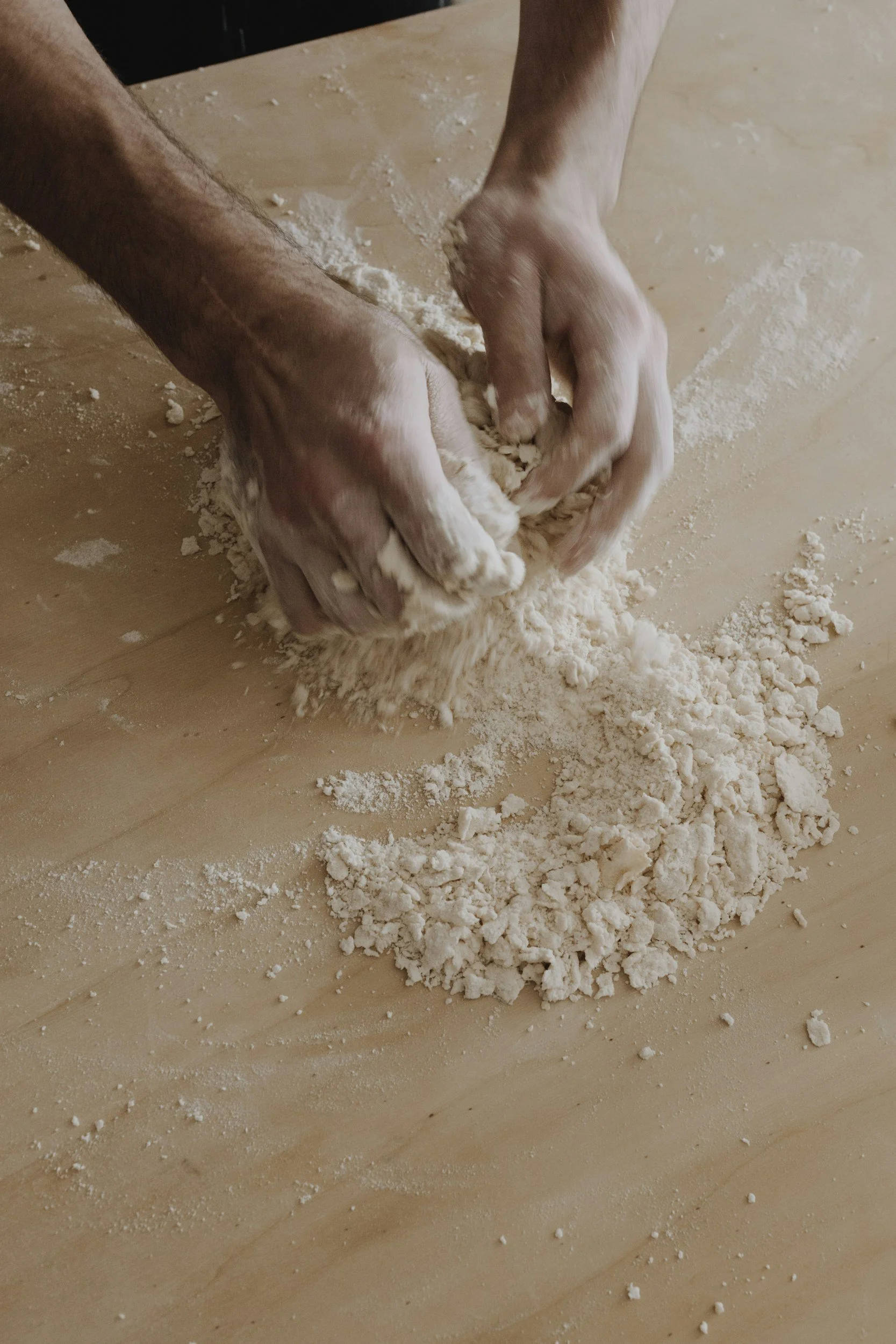
About Fresh-Milled Flour
Fresh-milled flour is flour that’s milled shortly before it’s used.
Unlike most store-bought flour, it hasn’t been aged or refined. The whole grain remains intact — including the bran and germ — which gives fresh-milled flour more flavor and allows it to retain more of the grain’s natural nutrients.
We started milling fresh flour because we wanted to better understand the ingredients we were using to feed our family. Flour shows up in everyday foods — bread, pancakes, cookies, and meals made at home — and we wanted it to be as nourishing and intact as possible.
How fresh-milled flour behaves
Because the whole grain is present, fresh-milled flour behaves differently in baking. This is normal and expected.
Fresh flour:
Absorbs more water
Benefits from short rest times during mixing
Develops flavor as it hydrates
When baking with fresh-milled flour, start with your usual amount of flour, add water slowly, and allow the dough to rest before making adjustments.
Storage and freshness
Fresh-milled flour is different from refined flour because it still contains the full grain, including the germ and its natural oils. These oils are part of what makes fresh flour more nourishing and flavorful, but they also mean the flour is best treated with a little more care.
For everyday use, fresh-milled flour can be stored sealed in a cool, dry place and used within 3 days. This works well for households that bake regularly and move through flour quickly.
If you’d like to extend freshness, refrigeration or freezing are both good options. Cold temperatures slow natural oxidation and help preserve flavor and quality, especially for whole-grain flour.
Refrigerator: 2–3 weeks
Freezer: 4-6+ months
When storing flour cold, always keep it airtight to protect it from moisture and odors. When you’re ready to bake, allow the flour to come to room temperature before opening the container. This helps prevent condensation from forming on the flour. I have taken it directly from the freezer, used it in a recipe, and put the remaining flour back into the freezer without any issues. I am just sharing what they recommend.
Fresh-milled flour doesn’t need special handling, just attention. Airtight storage, minimal temperature changes, and using it within a reasonable window all help ensure the flour performs well and tastes the way it should.
What changes when flour is milled fresh
Commercial flour is often milled, refined, and stored for long periods of time before it reaches the shelf. During that process, the bran and germ are typically removed and nutrients are lost or altered.
Fresh-milled flour follows a different approach. The entire grain is milled and used as-is, without aging or refining. This means the flour still contains the parts of the grain that naturally hold fiber, oils, and micronutrients.
Because it hasn’t been stored for months or processed to extend shelf life, fresh-milled flour reflects the grain much more closely to how it was grown.
Nutrition and the whole grain
Whole grain flour includes:
The bran, which contains fiber
The germ, which contains natural oils and nutrients
The endosperm, which provides structure and energy
Fresh-milled flour keeps all three parts together. This is one of the main reasons people seek it out when they care about the quality and completeness of the food they’re making at home.
We don’t add anything back in. We don’t fortify or enrich. We simply mill the grain and let it be what it is.